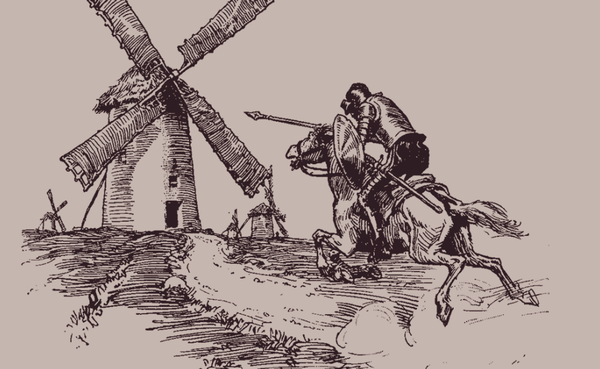
Why Your Best Work Will Probably Be an Accident
On the impact of the highly improbable and how the Black Swan teaches us to be open to luck.


I recently picked up Nassim Taleb’s The Black Swan, and it did something very rude: it told me that my entire career trajectory—and yours, too—is likely not the calculated, deliberate roadmap you think it is. It claims that, in actuality, it is a series of lucky stumbles that we’ve rebranded as strategy. If you ask a successful person how they got where they are, they will usually hand you a beautifully bound narrative. They’ll talk about "early visions," "strategic pivots," and "five-year plans" executed with military precision. They speak as if they were standing at the base of a mountain, saw the peak, and hiked a straight line to the top. They are lying. Not because they are dishonest people; they are lying because the human brain is a master at tidying up the messy, chaotic crime scene of our lives into a neat, logical story. We are biologically hardwired to find patterns in the noise, even when the noise is just... noise.
We are so socialized that we feel that we must explain our actions to ourselves, and to others, by providing reasons. We are not designed to think without a story.
Taleb calls this the Narrative Fallacy. It is our vulnerability to over-interpretation and our predilection for compact stories over raw, complicated reality. Humans look at the past and see a series of inevitable A-to-B steps. We think, "Of course I became a successful graphic designer; I liked drawing as a kid!" ignoring the 500 other kids who liked drawing and ended up in accounting.
In reality, most of our creative breakthroughs are less like a calculated chess move and more like a typo in a tweet accidentally launching a billion-dollar meme coin. The "Big Hit" is almost always a Black Swan—a term Talib uses to describe an event that is an outlier, carries an extreme impact, and is only explained away after the fact to make it seem predictable.
For the creative professional this is both terrifying and incredibly liberating. It means that the LinkedIn Guru’s advice about "manifesting your destiny" through 4:00 AM cold plunges and rigorous scheduling is mostly smoke and mirrors. If we want to be truly successful creators, we need to stop trying to be master planners and start learning how to be more accident-prone. We need to stop building maps and start building magnets.
Mediocristan and Extremistan
One of my favorites of Taleb’s brilliant revelations is that we actually live in two different worlds, and we’ve been using the wrong rules for both. He calls them Mediocristan and Extremistan. Mediocristan is the land of the predictable; the land of the bell curve. If you gather 1,000 people in a room and add the world's heaviest human, the average weight barely changes. Weight, height, and calorie consumption are Mediocristan variables. If you’re a dentist, your income is in Mediocristan. You can only drill so many teeth in a day. Your success is linear, capped by your biology, and, while safe, it's remarkably difficult to become a billionaire by accident in mediocristan.
Then, there is Extremistan. Extremistan is where the exponential live: wealth, social media followers, book sales, and creative influence. If you gather 1,000 people in a room and add Jeff Bezos, the average wealth of the room jumps to several hundred million dollars. One single data point—one Black Swan—changes everything.
As a creator, you have unwittingly moved your residency to Extremistan. This is the land of Winner-Take-All. In this province, 99% of the rewards go to 1% of the people. It’s a world where ten years of steady, "good" work can be utterly eclipsed by one three-minute video that hits the zeitgeist for reasons nobody can quite explain.
For someone who craves a predictable career path, Extremistan is a nightmare. But for the artist, it is the only place where true magic can happen. The problem is that most of us are trying to apply Mediocristan logic to an Extremistan environment. We think that if we just put in the hours, the universe will reward us. But Extremistan doesn't only care about your hours; it also cares about your exposure. You can’t get lucky if you don’t get out there.
Our world is dominated by the extreme, the unknown, and the very improbable... while we spend our time on small talk, focusing on the known, and the repeated.
Engineering Serendipity
So, how do we handle living in a world of high-stakes accidents? We don’t abandon strategy; we just change what we are strategizing for. Instead of strategizing for specific outcomes, start strategizing for opportunities. Taleb suggests a practical framework called the Barbell Strategy to mitigate the inherent risks of Extremistan. Essentially, you stop playing the middle. Instead of a medium-risk career that could leave you stranded during a market shift, you split your life into two extremes. You keep 90% of your energy in something really safe; the boring day job or stable freelance gig that ensures you are Antifragile and paycheck-secure. This safety net buys you the right to dedicate the remaining 10% to pure, unadulterated madness. You aren't aiming for a steady 5% gain in that 10% margin; you are aiming for a 10,000% return on an accident.
This wild 10% is where you build your Collision Surface. Most networking is just people in suits exchanging LinkedIn QR codes and pretending to care about each other’s “synergy” (whatever that means). It’s highly optimized, soul-crushing, and completely useless for finding Black Swans because it only connects you to the things you already expect. To find the Big Hit, you need to be accident-prone in a good way by intentionally making your creative life a little more chaotic.
The most effective way to engineer this lucky break is to publish in public. We often want to hide our work until it’s polished to a mirror finish, but perfection is the enemy of the Black Swan. Every time you share a raw thought, a digital sketch, or a half-baked theory online, you are casting a hook into a global ocean. You have no idea what’s going to bite—it could be a troll, or it could be a creative director in London looking for exactly your brand of weirdness. You definitely won't catch anything if your line isn't in the water.
Go to parties. If you’re a scientist, you should not spend all your time in the lab. You should go to bars, talk to strangers, and be open to the 'accidental' discovery.
Crucially, this strategy only works because we can now fail cheaply. In the old days, chasing a Black Swan might cost a fortune; if you wanted to make a film, you needed a studio and a mountain of celluloid. Today, the cost of "failing" at a blog post or a TikTok video is effectively zero. Because the downside is capped at a few hours of wasted time, you can afford to be wrong 99 times. In the province of Extremistan, you only have to be right once.
The Zen of Not Knowing
The hardest part of adopting Taleb's philosophy is the psychological shift. We want to feel in control. We want to believe that if we follow a 10-step "Masterclass" from a guy with a very expensive headset, we will get the result. But the truth is, if you can predict a "Big Hit," it isn’t a Black Swan. The things that truly change the world—and your career—are the things no one saw coming, including you. We have to stop mistaking the map for the territory. Your brand strategy is the map; the chaotic, beautiful, unpredictable world is the territory. Don't be afraid to throw the map away when you see something interesting in the distance.
Ultimately, The Black Swan is a lesson in humility; a call to reorient your effort. We often use perfectionism as a sophisticated-sounding shield for our own terror—a way to avoid the vulnerability of being seen before we feel ready. But in the province of Extremistan, being ready is a myth. If you wait until the work is perfect, you’ve already optimized away the very rough edges that luck needs to grab onto.
I am sometimes amazed at how people can have a miserable day because of a delay in a flight or a bad cup of coffee... but not feel the same way about the fact that they are alive.
So, don't stop working hard; just stop working so narrowly that you leave no room for the unexpected. Instead of trying to manifest a specific, rigid destination, focus on becoming a person with high output and low attachment. Go out, be bravely messy, and keep your overhead low. Treat your "failures" not as tragedies, but as cheap data points in a much larger experiment. Your best work is currently out there, waiting for you to accidentally run into it.