This Week In The Arts - Bad Bunny, Art Basel, and Epstein.
Weekly Edition - Art and Culture Newsletter - Thursday, February 12, 2026


Hello everyone, the team has been on a much needed hiatus since the holidays. But alas, we are back now and better than ever. For this week our insights across art, music, and culture show something. A pattern keeps appearing, see if you can spot it. Let us know in the comments what take-aways you have.
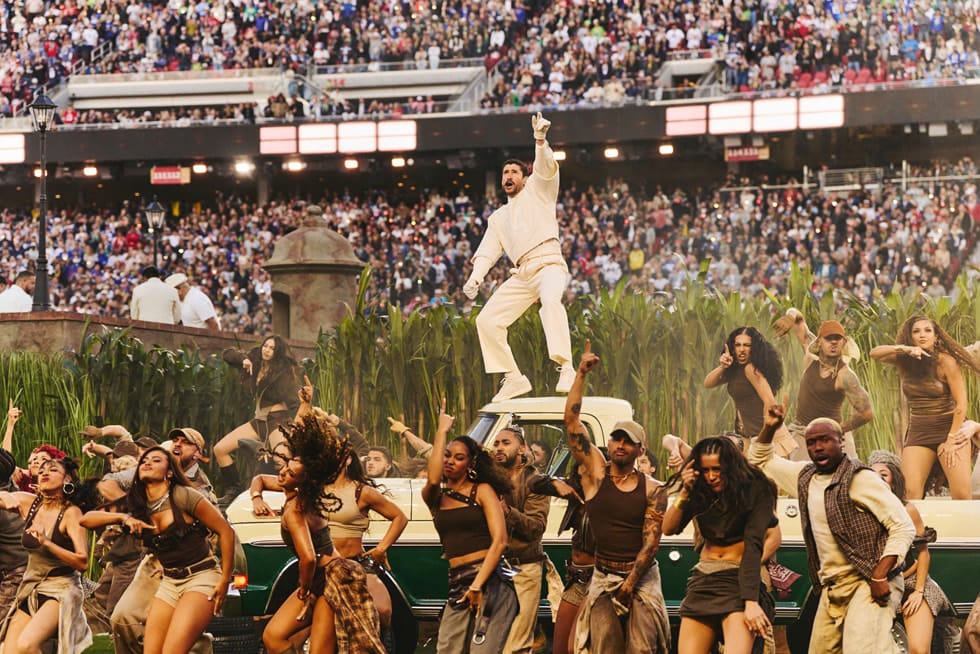
Bad Bunny Super Bowl controversy

Republicans have announced they are launching an investigation over apparent explicit language and suggestive dancing during the Puerto Rican singers half time performance.
Read more here.
Independent music labels generate high profit for artists

The Organization for Recorded Culture and Arts (ORCA) published a new report showing how top indie labels drive artist growth. “For the first time, we have real numbers that show the economic power of independent labels and the benefits this model delivers for artists.” Patrick Clifton, Executive Director, ORCA.
Read the full report here.
Art Basel Qatar closes its inaugural edition

The inaugural edition of the new Art Basel Qatar finished last Saturday February 7th. The exhibition drew in more than 17,000 attendees and represents a shift as the first art basel to be held in the middle east.
Read more here.
On Mediocristan and Extremistan
One of my favorites of Taleb’s brilliant revelations is that we actually live in two different worlds, and we’ve been using the wrong rules for both. He calls them Mediocristan and Extremistan. Mediocristan is the land of the predictable; the land of the bell curve. If you gather 1,000 people in a room and add the world's heaviest human, the average weight barely changes. Weight, height, and calorie consumption are Mediocristan variables. If you’re a dentist, your income is in Mediocristan. You can only drill so many teeth in a day. Your success is linear, capped by your biology, and, while safe, it's remarkably difficult to become a billionaire by accident in mediocristan.
Then, there is Extremistan. Extremistan is where the exponential live: wealth, social media followers, book sales, and creative influence. If you gather 1,000 people in a room and add Jeff Bezos, the average wealth of the room jumps to several hundred million dollars. One single data point—one Black Swan—changes everything.
This is an excerpt “Why Your Best Work Will Probably Be an Accident” from one of our independent writers Jesog Lee. Read the full story here.
Support the Studio
If you enjoy the arts, why not support the studio? Becoming a paid member of The Art Newsletter gives you full access to our complete library of essays and arts journalism. It’s the best way to read The Art Newsletter and to help support minority owned independently operated media.
! We are now currently offering a student discount 50% off our top subscription for 4 years. Send an email over to info@theartnewsletter.com to confirm your status. !
If you enjoy our work, becoming a paid supporter gives you full access to our complete library of essays and ongoing writing. It’s the best way to read The Art Newsletter as a complete body of thought
Why Epstein is already being forgotten
We as a society are placed into an ever stranger spot right now, as information is being slowly dripped out by the government about the horrendous actions of Epstein and his cohorts. I am determined to say the quiet part out loud. Online, it feels as if our country and society are falling apart, while our day to day lives seem to remain business as usual.
Turning and turning in the widening gyre
The falcon cannot hear the falconer;
Things fall apart; the centre cannot hold;
Mere anarchy is loosed upon the world,
The blood-dimmed tide is loosed, and everywhere
The ceremony of innocence is drowned;
The best lack all conviction, while the worst
Are full of passionate intensity…
Surely some revelation is at hand;
Surely the Second Coming is at hand.
I start here with an excerpt of Yeats, “The Second Coming.” This poem was famously written after the aftermath of World War I and the Spanish flu, to which his own wife contracted while pregnant. To sum up the meaning, the full poem describes a world that is so dark and twisted that the speaker believes that surely this is the end of time, that Christ himself is returning, but instead the speaker describes a new age or “gyre” as a beast that slouches toward Bethlehem to be born, to define a new, darker period of civilization...
This is an excerpt “Why Epstein is already being forgotten” from one of our independent writers Wolfgang Burst. Read the full story here.
From the Archives
The Aesthetics of Wealth Inequality
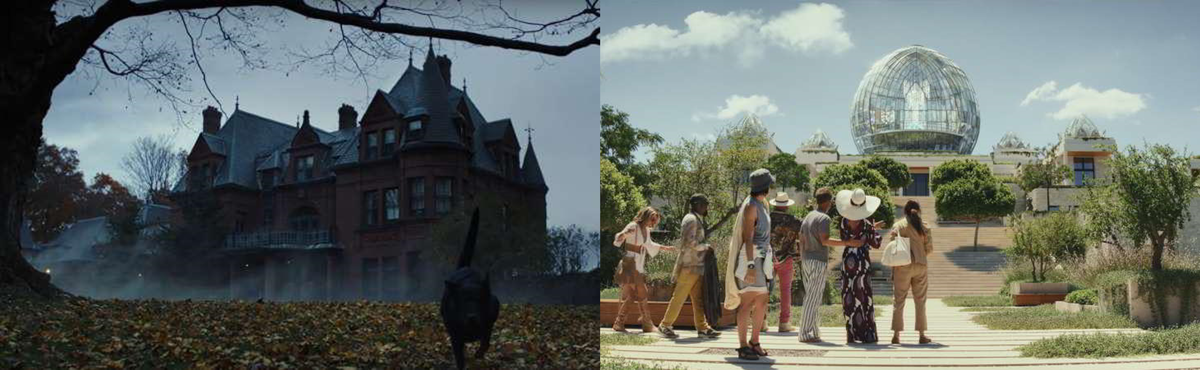
There’s much that is textually similar about the first two of Rian Johnson and Daniel Craig’s Benoit Blanc mysteries: Knives Out and Glass Onion. Both films satirize rich people, where in contrast to the typical whodunnit trope of having ambitious underlings be the murderers, guilt ends up squarely on the richest, most privileged characters. The central murders in each film are both explicitly characterized as an attempt by the wealthy to keep total control over their oligarchic power. Yet for two films both about the injustice of wealth inequality, the visual styles they use to depict that wealth could not be more different.
This, then, brings us to one of the key differences in the way wealth carries itself in these different depictions. The classical version of wealth wants to assert its power at all times, to make one hyper-aware of the innate differences between those in power and those who serve it. Modernist wealth by contrast wants to hide its presence. It will implicitly preserve the power imbalance present in the wealth inequality, but in doing so it will put up the appearance of no such imbalance existing.
This is an excerpt “The Aesthetics of Wealth Inequality” from one of our former independent writers Oliver Stevens. Read the full story here.
Thank you for reading everyone, if you enjoy our content please leave us a rating and comment to let us know your thoughts. We will see you guys soon.