Interview with Artist Preston Douglas Boyer
Preston Douglas Boyer (b.1995) is a multidisciplinary artist who works between painting, fashion, and performance, whose work considers how these forms are physical manifestations of the spiritual journey. We sat down for a conversation, about art, faith, and becoming.
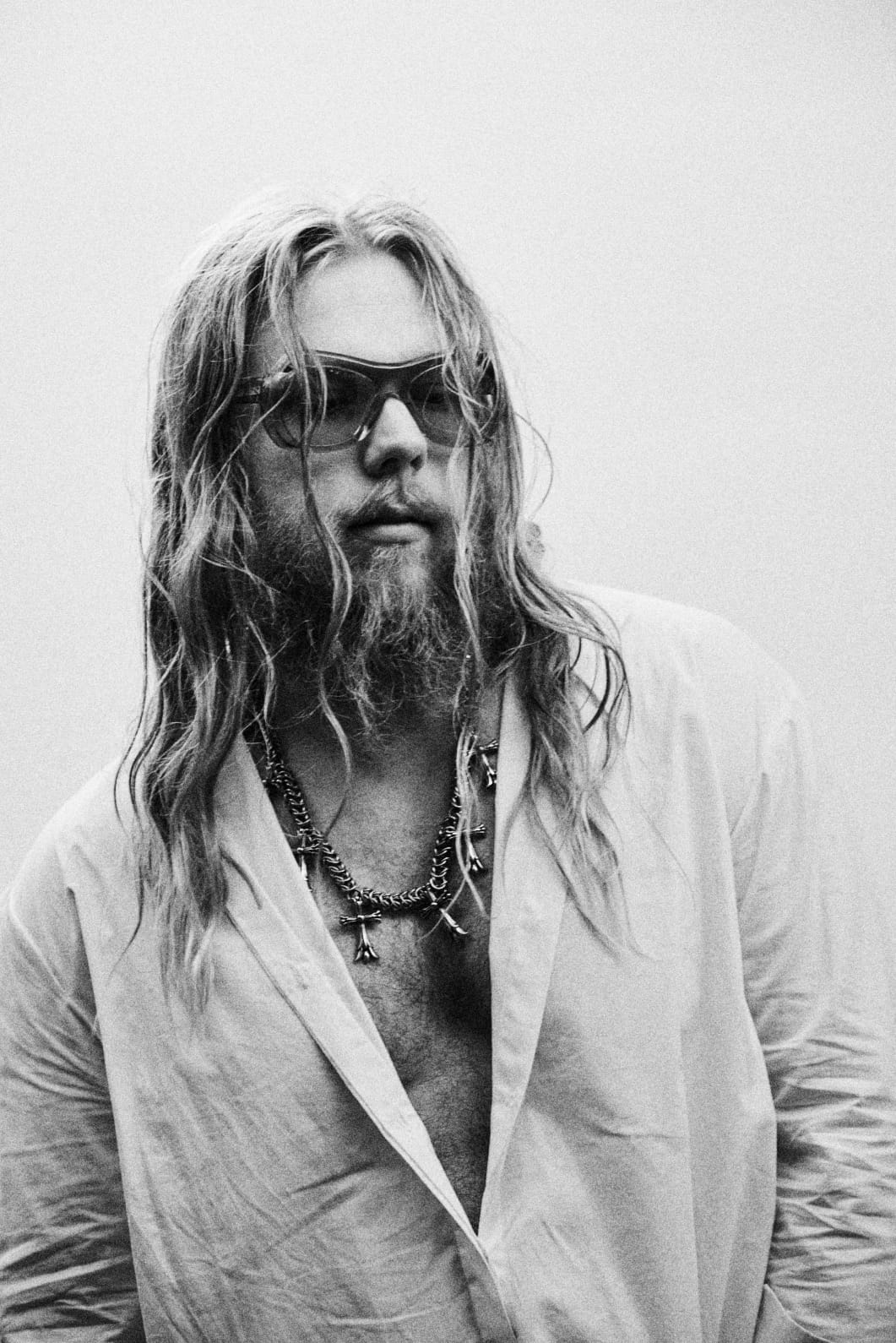
Preston Douglas Boyer (b.1995) is a multidisciplinary artist who works between painting, fashion, and performance, whose work considers how these forms are physical manifestations of the spiritual journey. His paintings are both remnants of performances and starting points for installations, addressing how surfaces can allude to both beauty and darkness through examining contemporary cultural conviction.
What follows is our conversation, lightly edited for clarity.
Wolfgang: Why don't you tell me more about yourself, your art, your story? I saw one of your videos on Instagram and thought it was really interesting.
Preston: Christian art often gets put into a box, and just having that as a genre itself is limiting. It's like, there are artists, musicians, actors, architects, creative individuals who happen to be Christian. That's a more interesting frame than being boxed into "this is how the work is going to be understood."
Wolfgang: Would you say you put yourself in that category, a Christian artist, or would you say you're an artist who happens to be Christian?
Preston: I'm an artist. God is an artist. I just happen to be Christian, and honestly, that's newer for me than people might assume.
I was raised in the church in Houston and had some resentment growing up, not deep, nothing terrible, not like the horrible experiences some people have in church. I just felt like it was what we did, and I didn't have a choice in it or really understand it.
Then I got sober at 19, and through the twelve-step process — the whole point of which is to build a relationship with God so you don't go back to the addiction — that really began my spiritual journey. I became genuinely Christian-curious again about five or six years ago, living in New York, mostly through worship music. During COVID I was listening to Joel Osteen constantly, it resonated because it was almost "Christianity light," messages of hope and victory, and I needed that.
I went to Lakewood for the first time around then. I grew up a mile away and never would have gone because of all the memes I'd seen online about it. I had a genuine spiritual experience there and remember thinking, this is more powerful than any art exhibition or performance I've been to in years. That's when I got more interested in listening to pastors and worship music than in artistic discourse, the weight of what they were talking about felt more substantial.
Still, I didn't actually start reading the Bible until about nine months ago. I was home, struggling with some things, and opened up the kids' Bible I'd been confirmed with in the Methodist church back in sixth grade, hadn't touched it in twenty years. Reading it for the first time really opened the floodgates. I'd been attending church every week leading up to that but never actually read the word, like writing a book report without reading the book, which is basically how I got through high school.
That changed things. When I moved back to LA in January, I picked that Bible back up and asked God directly: Jesus, if you're real, I need you to show me. That's been my biggest hang-up with Christianity for twelve years: I'd had a relationship with God for about ten years through recovery, without really having a relationship with Jesus specifically.
That night I got up for a glass of water and looked at the clock: 3:16. I didn't think much of it. Next night, same thing: 3:16 again. That was the point everything flipped for me. I started accepting Jesus as God, looking into the historical and academic accounts, reading the word, and just having the Holy Spirit reside in me through that process. Things shifted immensely. Becoming a father is tied into all of this too.
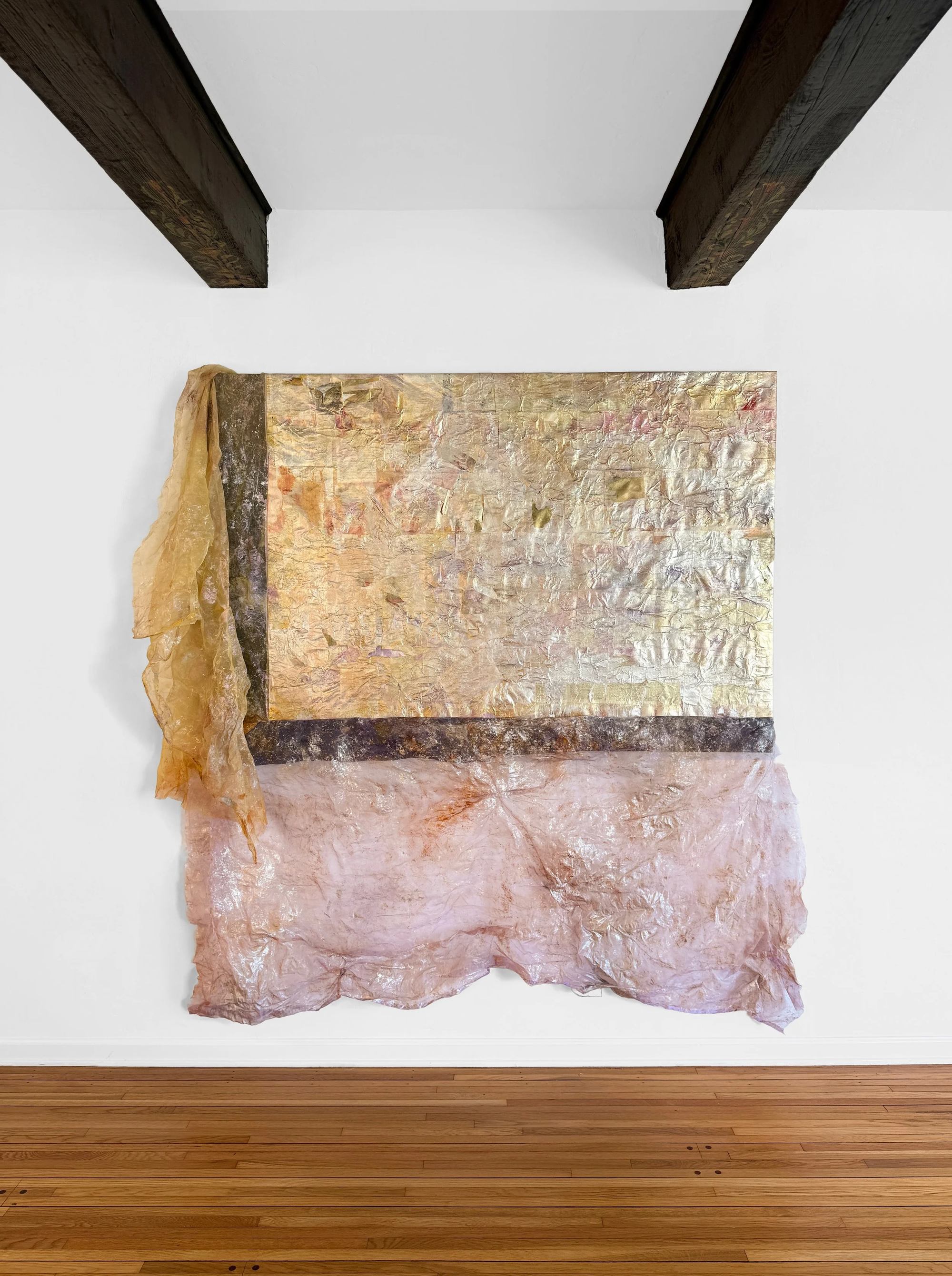
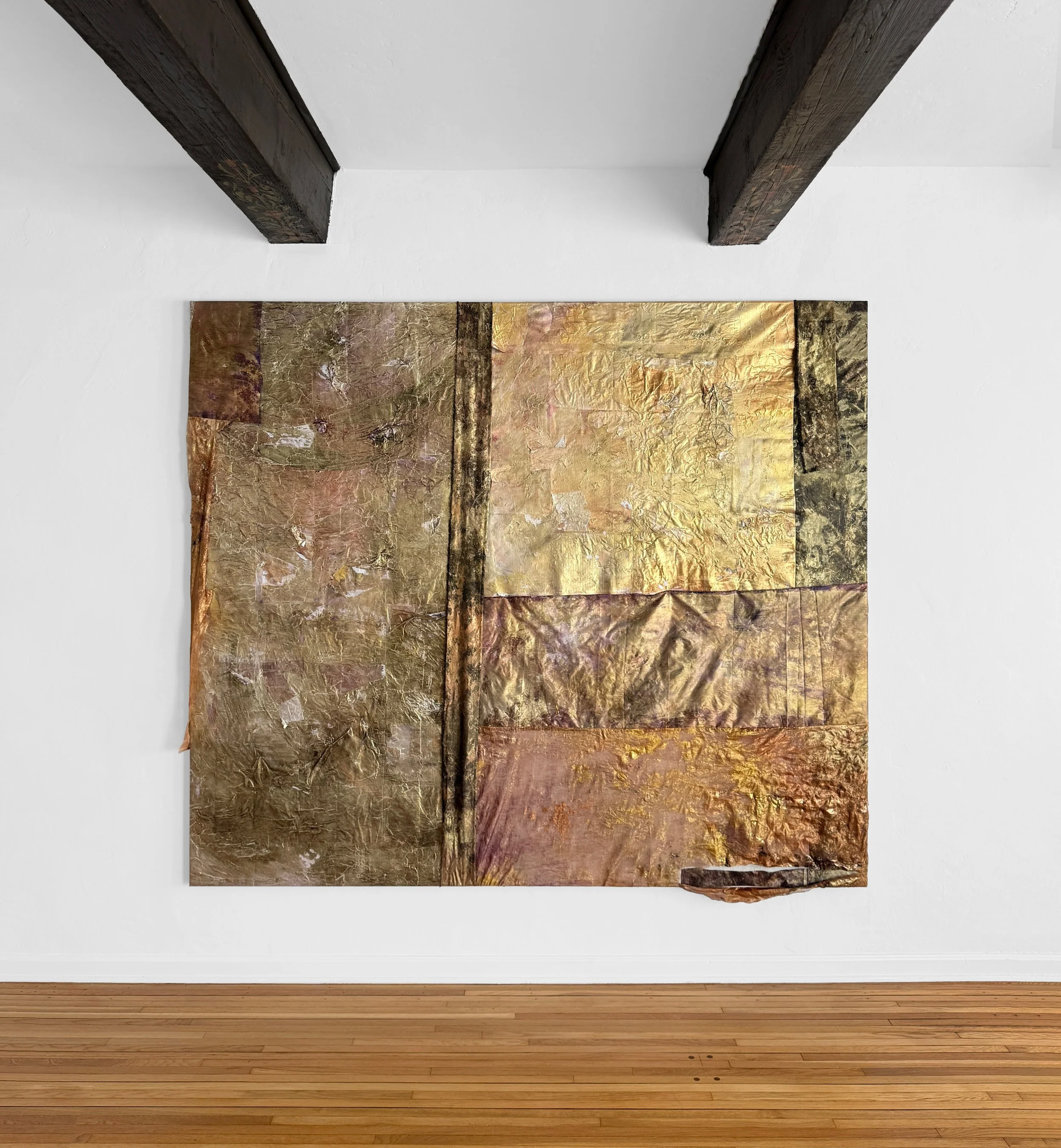
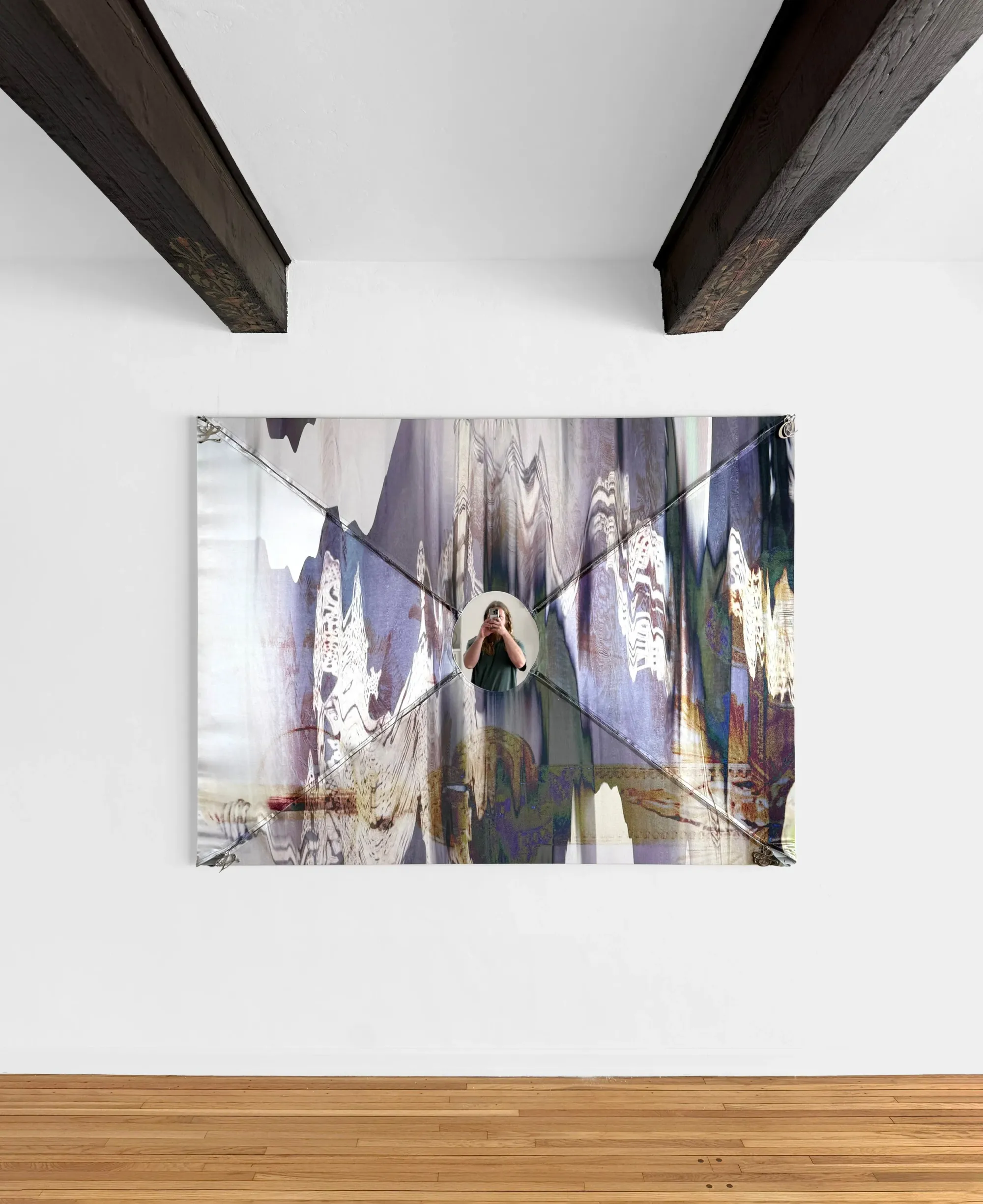
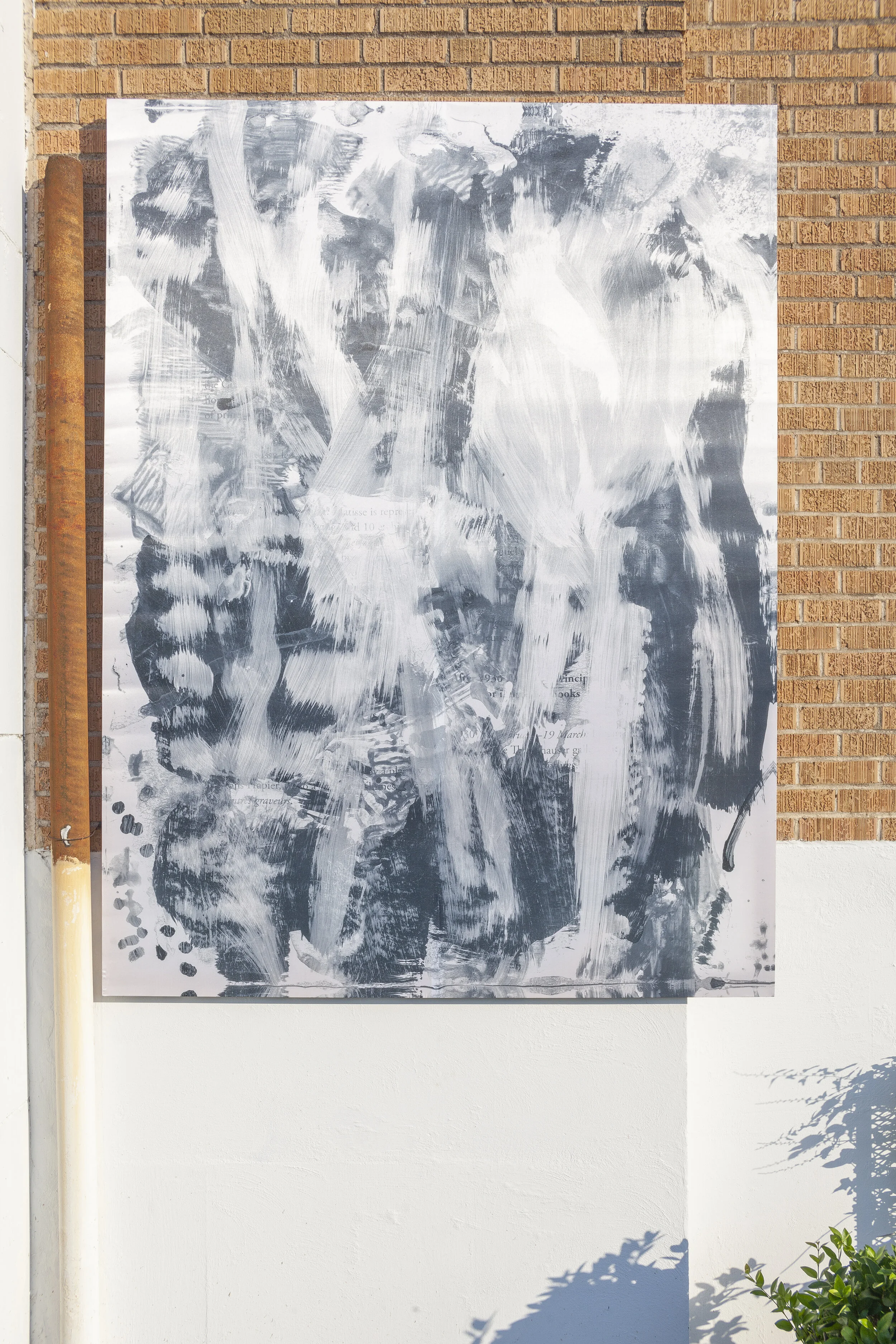
My current work is the testimony paintings, which relate directly to that personal testimony. I got the vision for them in a hot spring, which is usually when I get visions, making paintings out of pages of the Bible, including the Book of Enoch and other apocrypha, the kind of texts contemporary Christians aren't really supposed to know about. That's always been my instinct: I want to know what I'm not supposed to know, to be at the forefront of things. Art used to feel punk rock. Fashion used to feel punk rock. Now Christianity feels extremely punk rock. It's cyclical — the Catholic Church is historically the biggest art collector in the world, so it's fun watching it come back into the fold.
I've been collecting Ethiopian Bibles, which include apocryphal texts alongside the official canon, plus King James Bibles and more mainstream Western Bibles, and making paintings out of that material, literally working with the text. Some people read that as sacrilegious, some read it as simply Christian painting. I love those conversations either way. For me, while I'm making the work, I'm usually listening to Christian podcasts or worship music, and it becomes meditation — prayer, really. Dealing with the word in a much more intimate way than I used to.
Wolfgang: That's beautiful. What was your path into the art world, when did you start as an artist, and what did that process look like from before you were Christian to now?
Preston: Neither Houston nor Seguin (Seguin, Texas a small town where Wolfgang was born) are historically art-centric places, Houston more so. I actually started in middle school making YouTube videos about sneakers, before sneaker culture was cool. I got made fun of relentlessly for wearing colorful shoes. Skateboard culture, hip-hop, basketball, rock and roll: sneakers were the culmination of everything I was into. That was my first real entry into visual culture.
From sneakers into streetwear, streetwear into luxury fashion, and then I became a celebrity stylist in Houston. Rappers passing through town would hit me up. Eventually I got bored of being a consumer, because I was an artist all along, and I started my own fashion brand before everyone and their mother had one. I had no idea what I was doing, I just did it: started around 2012 or 2013, got sober in 2014, and launched my first collection about nine months after that.
Within three years I was invited to meet with Vogue at the World Trade Center. I was going to school in Houston at the time, showing my third collection, and they told me, "Preston, you're an artist, not a fashion designer." I was confused. Years later, living in New York, I realized they were right: the fashion projects were always art projects. Conceptual, sentimental, cathartic bodies of work more than commercial ones.
That's when I got into the Houston gallery scene, I was in a relationship with a painter, which sparked my love for painting and art history, and I got less interested in fashion's commercial, cyclical nature. Art seemed to carry more weight. I met a lot of people through galleries, found my community there, and found my mentor, Mark Flood, from Houston, still my favorite artist. I started working for him about eight years ago, then moved to New York in 2019 after graduating from the University of Houston. COVID hit not long after, and the fashion and art practices essentially merged, there was no separating them during that period of constraint.
I stayed in New York until 2023, coming back to Texas every couple of months, New York has an energy to it, especially back then. I've been a full-time artist since 2020. I still do fashion-related and performance projects, and I started making worship music too, an experimental worship album called Repurposed Religion, my last eighteen months in New York. I have a record label by the same name. I took seven of my favorite worship songs, CeCe Winans and others, and remixed them with underground electronic producers from around the country.
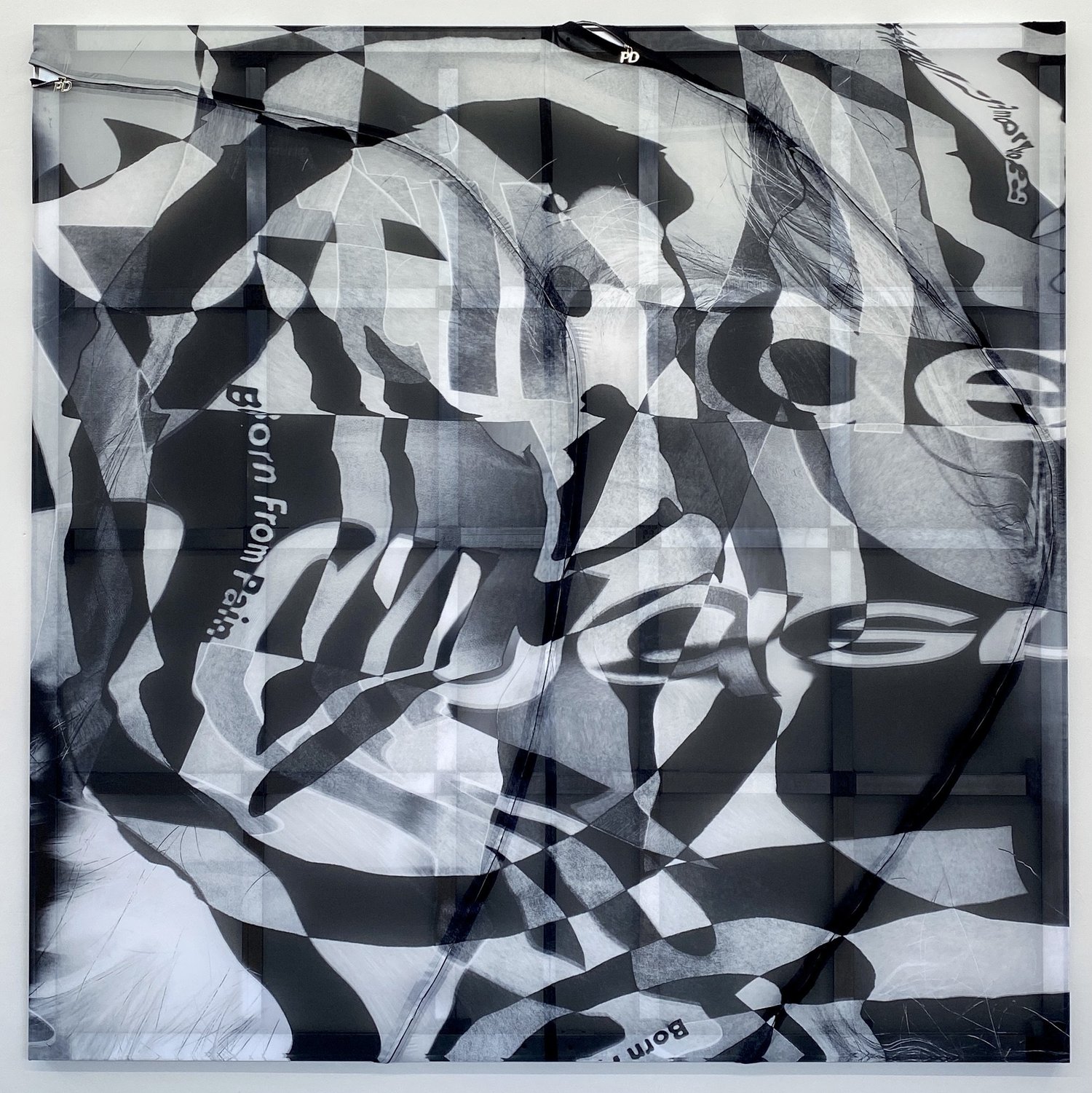
I'd go to these underground experimental electronic clubs in Brooklyn on a Saturday and church on Sunday, and I saw so many parallels: the musical structure, what people were seeking. Different results, obviously: someone doing drugs in the bathroom stall next to me at the club versus someone covering themselves in the blood of Jesus at church, but similar core human longing. I've been that person in the bathroom stall too, for what it's worth.
That album came out under the name Preston Douglas Boyer on Spotify, called God's Grace. At the time I hadn't fully accepted Christianity. I was still Christian-curious, not yet reading the Bible, doing morning meditation apps instead of actually reading a chapter and letting the Holy Spirit speak through it.
I moved to LA in 2023 with my now-wife, felt a calling to go, so I went. We're still here, though we go back to Houston often, a little harder now with kids. I have a next musical project that's basically been finished for two years — live strings, live choir, people from my church singing on it — called Revival. I spent two years trying to fundraise to stage it properly in Paris or New York, and it just hasn't been God's timing. I was in a studio in Brooklyn with my main producer this week revisiting it, and I had the feeling that maybe I'm just supposed to release the sonic component now rather than wait for the full performance. It's dark, experimental, my wife's a choreographer and dancer, there are clothing and painting elements built around it too. Eventually I want the full performance to happen, but for now I'm excited to just put the sound out there.
There's a real conversation happening right now around Christianity and contemporary culture through art, and it isn't just one note: there's room for the polished, hopeful side, and there's room for the darker, harder things to be acknowledged too. Contemporary Christian art isn't only beautiful and glorious. I think about someone like Forrest Frank, who has real lyrics about struggle. What I'm doing is more underground and strange, a different register of the same conversation. And I love finding other Christian artists doing their own version of it, there are a lot of them, at different stages, and I think that's beautiful.
I've been thinking a lot about, and honestly writing about, movement I feel part of, called Spiritual Expressionism. You can look back at Hilma af Klint, who was an artist having spiritual revelation and abstract painting really being, in many senses, inspired by God. Kandinsky is usually credited as the first to formalize abstract painting, though people debate whether abstraction predates Hilma, but her relationship with Jesus shaped her practice too. Abstract expressionism, impressionism, post-impressionism: I think a lot of artists right now are tackling Christianity again after it's been something of a taboo in the fine art world for a long time.
Wolfgang: It's interesting you're a musician too, I didn't see that on your page at first. How do those two worlds connect for you? I ask because I relate: I'm a musician, I run this newsletter, I'm still in school, and I feel like a lot of people are doing a dozen things at once because there's just so much inspiration and so many ways to channel it.
Preston: A hundred percent. Going back to God — Father, Son, Holy Spirit — Jesus showed up in many ways. Having that core identity as a child of God is what lets me be an artist in the fullest sense: moving across fields and channeling creativity without being bound to one constraint. It's easier for other people to file you under painter, musician, or entrepreneur, but what came out of my fashion years was understanding that I'm an artist first, and there's real freedom in that: I get to do whatever I want.
I wouldn't necessarily call myself a musician, though I'm honored when people do, I look like one, apparently, and everyone assumes I am. I'd say I'm a painter, if I have to name the language I communicate in most. But I've played music my whole life, I love guitar and songwriting, and poetry was actually my first art form. Poetry and music are everything to me: I listen to music constantly while I paint.
I miss the collaborative nature of fashion, painting is isolating, which I love at times too, but it's part of why I've let myself be a multidimensional artist, because we're multidimensional beings, and Jesus is the most multidimensional being there is. I understand why press, galleries, or institutions need to define you as one thing for a specific reason, you can't be everything to everyone at once, only one person can do that, and I'm okay with that.
I also have a water company: Liquid Life Wellness Water. I'd be at a meeting in New York representing the water brand one day, and the next I'm in a major gallery meeting as "the art guy" who happens to know about water. The original plan was for it to become a bottled water business; it's turned into the first water-focused podcast, called Liquid Life, and at this point it's really a media company. Eventually I'll build out a CPG brand and a hospitality piece around it.
It's a wild ride. Like I said about deciding where to live: I do what God tells me to do. Some weeks that's making paintings. Some months it's the water business. Some days are focused on my work with Piraeus Capital, and helping entrepreneurs build their businesses.
I've thought about Duchamp a lot in this context. I saw his show at MoMA: the first rooms are his impressionist and futurist paintings, coming off Picasso and Braque and cubism, and around 1910 he won a major award at the Armory for Nude Descending a Staircase, No. 2. I got emotional looking at that painting — I'd spent almost a decade thinking about it through reproductions — and seeing the level he was painting at, competing with his peers, and then he abandoned painting entirely in 1914 for conceptual, commercial, and performance work. I think about that: maybe there's a day I stop painting entirely and just do water, or just do music. But for me it's a little different than Duchamp, because I genuinely love painting. If I could do one thing for the rest of my life, it would probably be that. That's why I call myself a painter, even with everything else going on.
Wolfgang: On the idea of constraint, we often assume the best art comes from having none, being free to express whatever God is telling us. Do you think there's a necessary constraint in your own practice, and if so, what is it?
Preston: Christianity itself is largely about constraint. From an art-historical, curatorial perspective, when you're in painting school, which I never did, but I dated someone who was, there are constant assignments creating constraints, and what you realize is that's just a condition of being human. We're inherently constrained by our humanity, and there's freedom and free will within that.
There's a quote that came to mind while you were asking: "jack of all trades, master of none." People usually stop there, but the second half is "but often times better than a master of one." I think about painters I love who are incredible at painting but also have some weird side project, a punk band or something, that you'd never know about unless you dug deep enough. A lot of my favorite painters are also genuinely great musicians who never made money at it and never tried to, it was just theirs.
With this body of work specifically, the testimony paintings have evolved into what feel like two separate bodies of work within one painting, I can't finish a piece because one element really is its own separate painting. It's been hard to hold real constraints in my practice because I get excited and one thing leads to another. I've been thinking a lot about minimalism over the past eighteen months, specifically because I'm a maximalist by nature, and sticking to material, conceptual, or visual constraints has been genuinely challenging, though the constraint itself often ends up becoming its own thing.
Wolfgang: Where do you see yourself going next, beyond the next series of paintings?
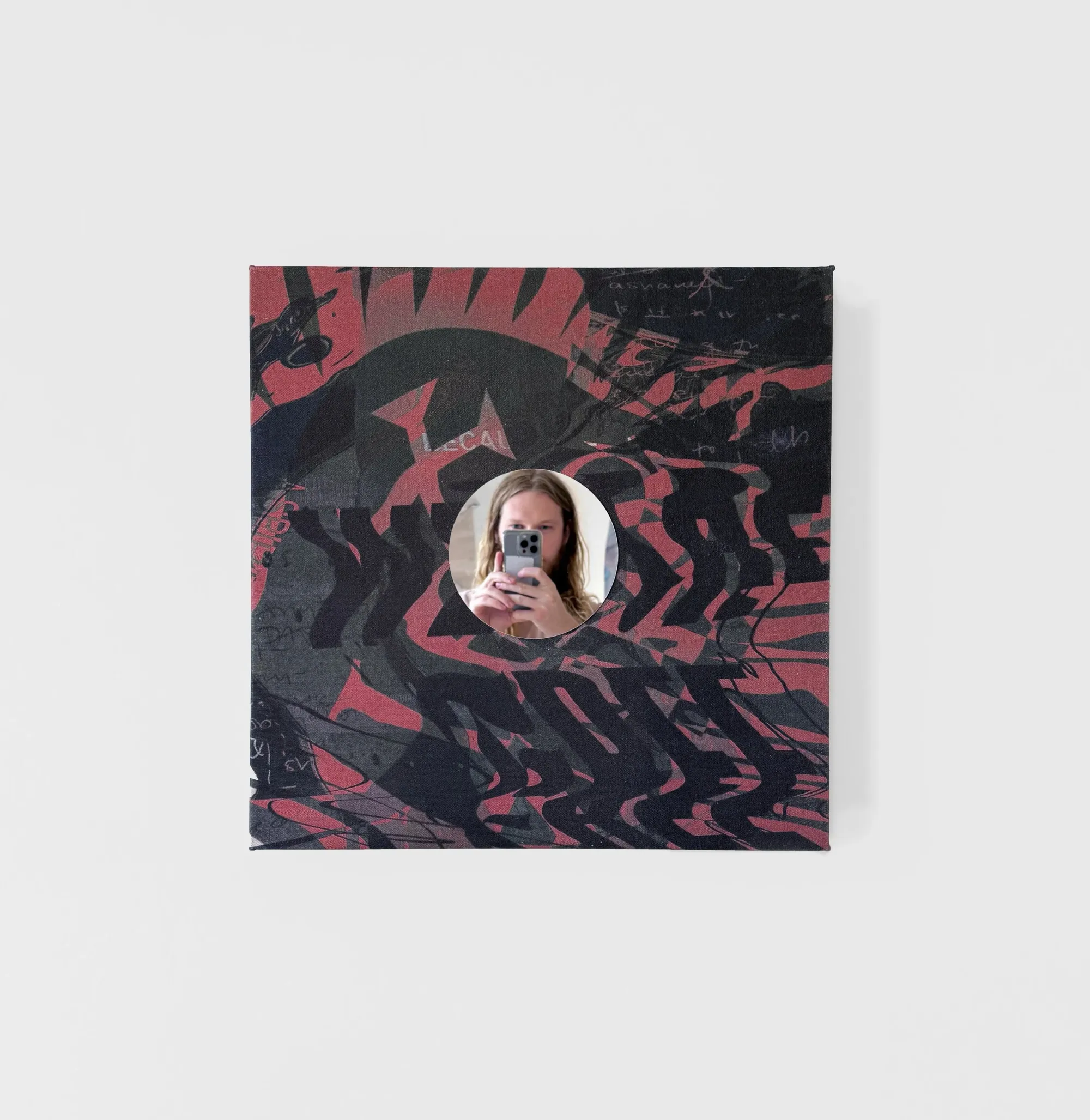
Preston: A lot is happening. The testimony series has shifted from gold, purple, brown, and black tones into blue, green, white, and silver, a few variations have come out of that, with mirrors forming the base of some paintings, and raw strands of linen with scratched text.
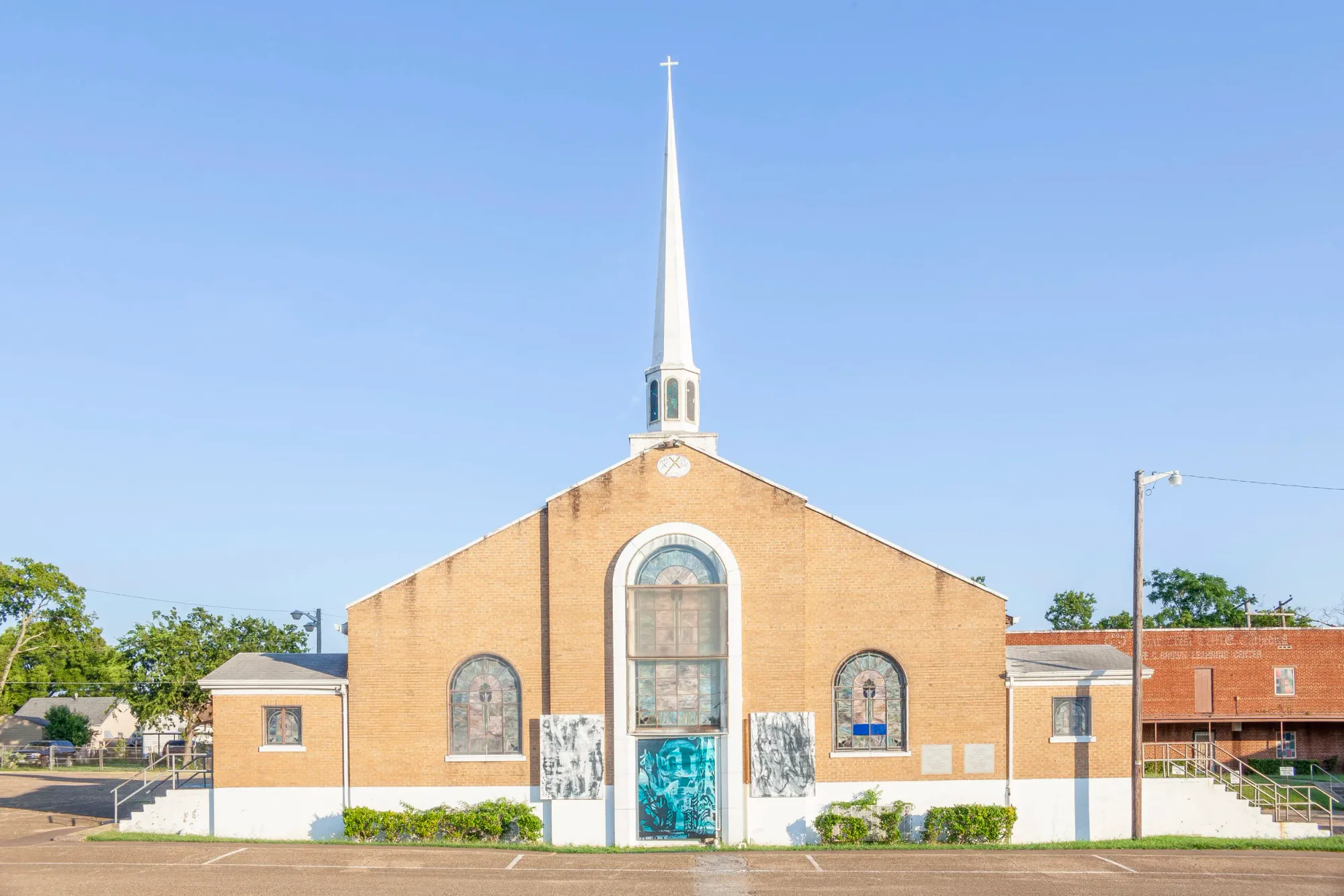
I want to get into public art and public sculpture, spaces beyond the gallery or museum, because the function of art goes beyond the collector's wall. I'm interested in how the work itself can shift the frequency of a space and people's interaction with it.
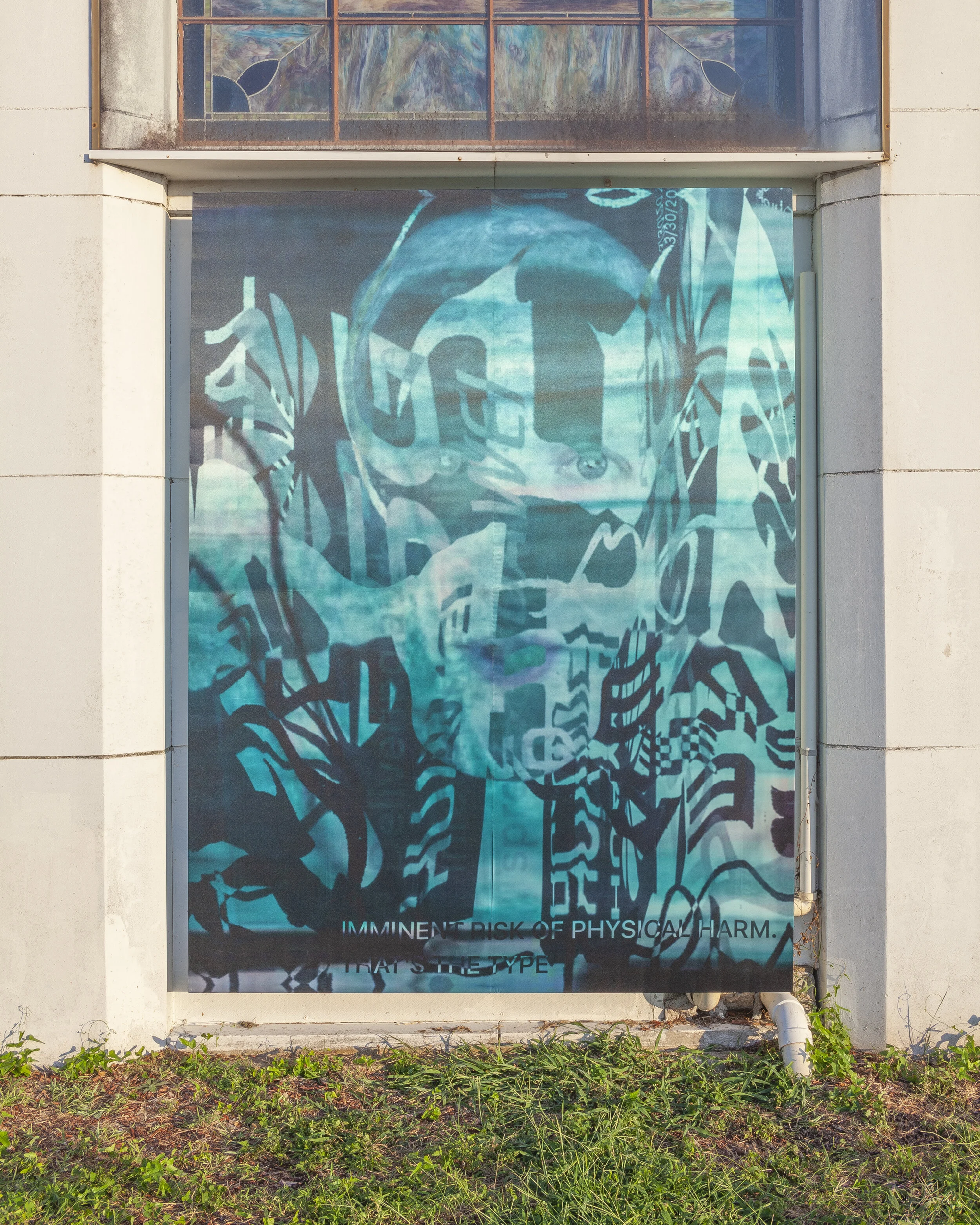
On the Revival project, we're going to release five tracks on Spotify so people get a sense of it, but I'd genuinely love for the full performance to happen eventually, I don't know when or where, I'm leaving that up to God. Whether it's a museum in Tokyo or somewhere else, I'll know when it's supposed to happen. I'm also excited about larger commercial gallery spaces, and placing work with institutions and collectors, I love every side of the art business, from the studio to wherever the work ends up living.
REVIVAL is a 30-minute experimental sound project, performance, and installation by Preston Douglas Boyer that continues his ongoing REPURPOSED RELIGION project, exploring faith, doubt, ritual, surrender, and spiritual transformation through painting, sound, fashion, and dance. The performance is structured in three movements—HELL, BAPTISM, and REBIRTH—and driven by an original musical composition of choir vocals, live string instrumentation, and physically created sounds. The project moves from distortion, chaos, and spiritual rupture, through cleansing and surrender, toward renewal, transcendence, and ultimately resurrection. REVIVAL began in 2024, and its sonic component is slated for release on September 3, 2026, across all major streaming platforms.
Wolfgang: What drew you to The Art Newsletter?
Preston: I saw a video you all did and connected with learning about artists I might not expect to be Christian, thinking through this from a historical perspective. I've felt this shift happening since I started that album back in 2023. My problem is I tend to be about three years too early to things, I get impatient and move on before something actually arrives. So sitting with the idea that Christianity is the new punk rock, that God is the new punk rock, and watching it become such a huge genre in mainstream music and podcasting, the question is how that actually filters into the visual language of culture, individually, commercially, institutionally.
You do it well — you have a high taste level, you're serious about it, and you're young, which is its own thing. You're in Austin, which historically hasn't been a visual-language city either. I know a lot of genuinely incredible visual artists there, and I get excited for Texas generally. I'm actually showing with Opera Gallery right now, they have sixteen locations around the world and just opened their newest one in Houston. It was in the Houston Chronicle and on Yahoo News today, I'm one of eight artists in their new group show, Texas Contemporary, opening in three weeks. That's a big deal. One of the biggest galleries in the world chose Houston, chose my work, and I'm grateful for it. I think we'll end up working together in other capacities down the line, bringing this work into spaces where the Bible has arguably never really been "cool."
Think about the most expensive painting ever sold: Salvator Mundi, attributed at least in part to Da Vinci, a painting of Jesus as the savior of the world, sold for around half a billion dollars. That's the history of the relationship between the church, art, and commission: what these works actually meant then versus what they mean now, in a 2026, twenty-first-century sense, is very different, and I want to sit with that difference honestly.
At the end of the day, who I am is a child of God, and my purpose is to share God's love with people. I don't want to come at this from "here are the answers, this is the truth," that's not necessarily my role, even though I understand it's someone's role. For me, art is inherently about conversation, about your own perception and understanding. Nothing is more challenging to talk about right now than religion, and my biggest fear is ever coming at these conversations like I've got the right answer and you've got the wrong one. I never want to be that person, and I never want to hurt or offend anyone — but there has to be room for me to speak my own truth and experience, which is what the testimony paintings are really about. They're about beauty, and right underneath that surface, a lot of hard conversations: personal struggle, the meaning of life. I don't know how else to work through that except through art.
A lot of people believe very different things, and are willing to die for what they believe. My intention is to create beauty out of my human journey with God, and I hope the work translates that way, for people to meet it where they're at and take what they're able to take from it. The Bible pages won't always be part of my paintings; I've got a decade of other bodies of work that lean more into cultural critique, critique of corporatocracy. Who knows where the work goes next. I'm just excited to see how the current work unfolds. Having kids, paying rent, making art: there's nothing better. I'm living the dream.
Wolfgang: You mentioned being early to things before, the fashion brand before everyone had one, and now feeling three years early to Christianity being the new punk rock. Looking three years ahead, what does that actually mean to you?
Preston: Punk rock, to me, is inherently counterculture — counter-narrative, counter-understanding — with real truth and resonance underneath it. And Jesus has always been the most punk rock figure there's ever been. Think about his actual life. There's nothing more punk rock than that.
Who knows where it all goes. It's been about two years now of me being genuinely open about this journey, becoming a father, studying the word, getting obsessed with it, wanting to be some kind of self-taught biblical scholar even though reading isn't naturally how my mind processes things. Getting into the weeds of it, the Book of Enoch, all of it, has been endlessly interesting to me at this point in my life. Jesus is punk rock, and that spirit runs through all of it.
Wolfgang: Being from Austin myself, I think it's had its moment and maybe that's fading a bit, but I think Houston is often overlooked, even though there's a real low-key richness of art and museums and culture there that people from the coasts tend to underestimate. Have you run into people overlooking you because of your Texas roots?
Preston: A hundred percent, and that's exactly what the Opera Gallery show is addressing. It's a sentiment that didn't really exist for generations of artists before me, I think because of the internet and social media shifting how people understand cultural impact and history. The Menil Collection, for instance — arguably the first truly special private institution outside New York or LA, maybe the best private institution of the twentieth century, with a genuinely singular vision around surrealism. The only freestanding Cy Twombly museum in the world is in Houston.
My first real experience standing in front of that final Twombly painting, on the right as you walk in, is what made me think, I need to paint. I had another spiritual experience later with a painter named Gael Stack, who passed away recently in her late eighties, another moment in that same gallery where I realized painting has the power to actually transform a space, to change the frequency of someone's experience in it.
DJ Screw, and so many other artists who've collaged things sonically and physically, historically people haven't seen the full impact Houston has had across art forms. I think we're finally getting our recognition, and I love it. I love Houston. It'll always be home no matter where I live. I consider myself a Texan first, and Texans are inherently punk rock: if you're a Texan, you're your own breed of person. I relate to Texans more than almost anyone else. There's a wildness in us.
Wolfgang: Besides feeling God call you there, how has your experience in LA actually been, and what led you there over New York or Houston?
Preston: We did our first Repurposed Religion performance here in LA not long after we moved: we arrived in August 2023, and the performance was that October, two months later. Dancers, a full collection built around it. Part of the move was just having more space and room to grow what I'd been building in New York.
The palette of Los Angeles changed everything — the mountains, the ocean, the greens and blues and browns. In New York I made almost entirely black-and-white work for a stretch, very graphic and hardcore, even what I wore was mostly black, in Houston too. Here in LA people think I look like a cult leader in all-white and tan. I don't think I would have pushed past that comfort zone otherwise.
There's a saying that you can't be a prophet in your hometown, I don't mean that to suggest I'm a prophet, but what you do can carry more weight somewhere you're uncomfortable and unknown, pushing against a system you're not embedded in. Over the past seven years we spent more than half of last year back in Texas. LA is great, and it's also a good in-between of New York and Houston. I have the fantasy of eventually living in Austin, Dallas, or Houston again, who knows. I can make art anywhere, I've had stretches without a stable home and still made the work. Whatever season I'm in has something to teach me, and that always comes through in what I make.
Wolfgang: Thank you for all of this, I've genuinely loved talking with you. It's been an amazing experience running the newsletter, connecting with people I never would have otherwise. We started it about two years ago, almost as a joke, just talking about random art with maybe a thousand subscribers and no real revenue. My co-founder and I were both busy, both in school, and at one point we almost stopped. But I felt like God was telling us to keep going with the Christian angle specifically, and the reception since then has been really encouraging. Was it scary for you to take a similar leap, given how much art content is already out there and how specific your niche is?
Preston: That's exactly how I felt. I looked around and found a few things online, but nothing with a real social presence around Christianity and contemporary art specifically. It felt like uncharted water, I could go wherever I wanted and meet people I never would have crossed paths with otherwise.
Wolfgang: I relate to your fashion-brand-before-everyone-had-one story completely. Maybe in five years everyone has a Christian art newsletter, who knows, I'm just glad to be early to it.

The Art Newsletter is an Independent Publication
We are a reader-supported publication. If you value thoughtful writing on contemporary Christian art, music, literature, and culture, consider supporting our work.
Becoming a paid member gives you full access to our complete library of essays, long-form writing, and arts journalism. More importantly, your support helps sustain an independent, minority-owned publication dedicated to serious cultural writing.
Membership is the best way to experience The Art Newsletter while directly supporting the work we do.