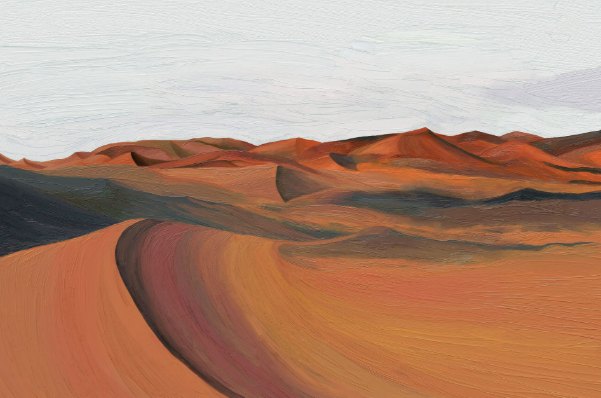
Fireworks Show on the Himalayas Sparks Fierce Controversy: Is Nature a Canvas for Human Artistry?
Famous outdoor brand Arc'teryx and pyrotechnic artist Cai Guoqiang lately apologized after their collaborative fireworks display nearly blew up Tibet's sacred mountains and damaged the local ecosystem

Recently, artists and brands have been forced to confront a critical question: When we talk about “respecting nature,” are we speaking to the market or the real mountains?
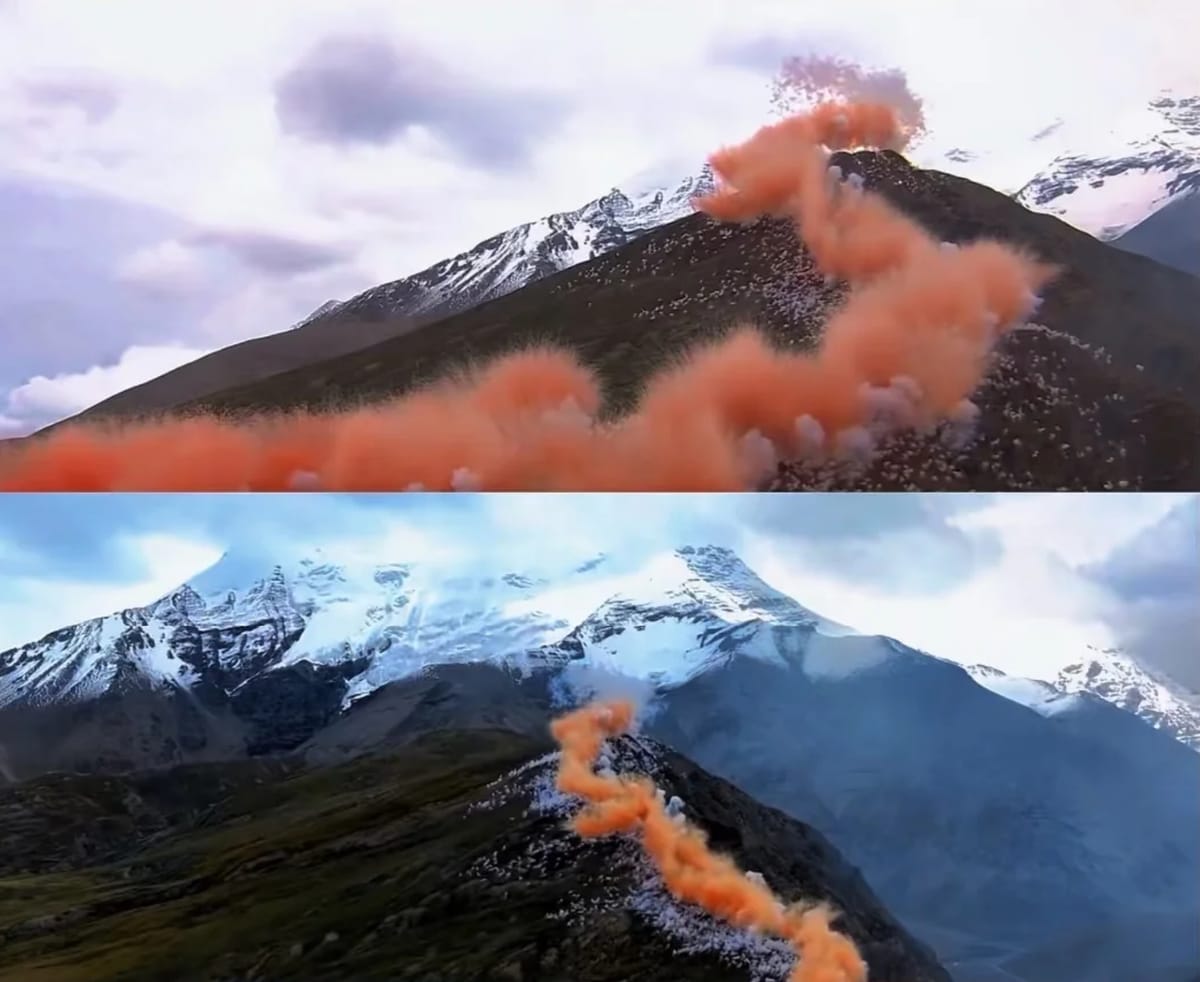
On September 19, 2025, world-renowned pyrotechnic artist Cai Guoqiang unveiled his latest monumental art project, “Shēng Lóng” (Ascending Dragon; also known as “Fireworks in the Himalayas”), on Weibo, a major Chinese social media. In the video, colorful fireworks bloom along the mountain ridge nonstop. Viewing from afar, the fireworks visually resemble the image of a gigantic dragon winding its way upward.
This is a firework display sponsored by and partnered with the famous outdoor brand Arc’teryx for commercial promotion. The show was held in the Gyantse region of the Tibetan Plateau, at an altitude of 5,500 meters, aiming to showcase the brand’s philosophy of “evolution” and “sustainability” through the collage of fireworks and alpine scenery.
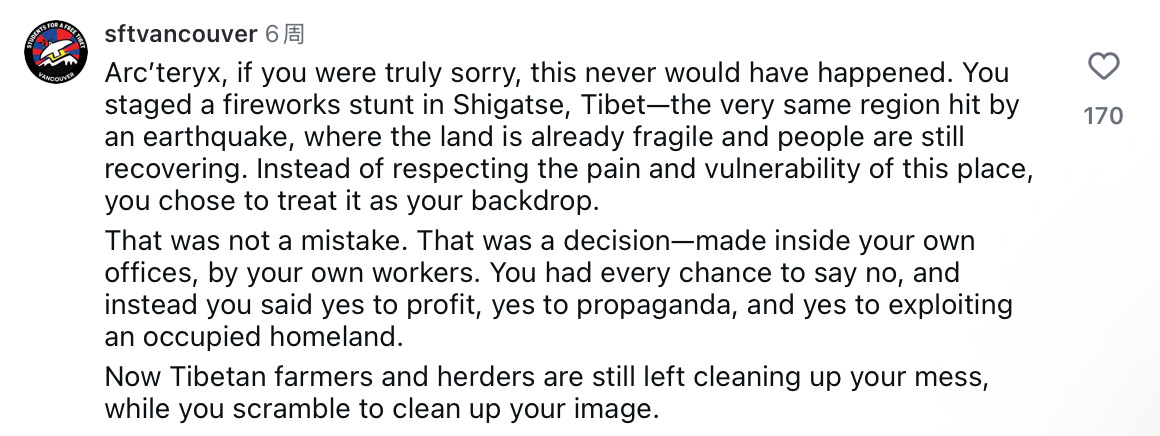
However, the following day, the project video triggered widespread controversy among Chinese netizens due to environmental and ecological concerns. Angry netizens flooded into the post’s comment section, criticizing Arc’teryx and Cai for polluting the local environment and disrespecting indigenous culture. The video of the project and relevant promotional content were then quickly removed from social media platforms (Weibo, RedNote, etc) by the brand and the artist.
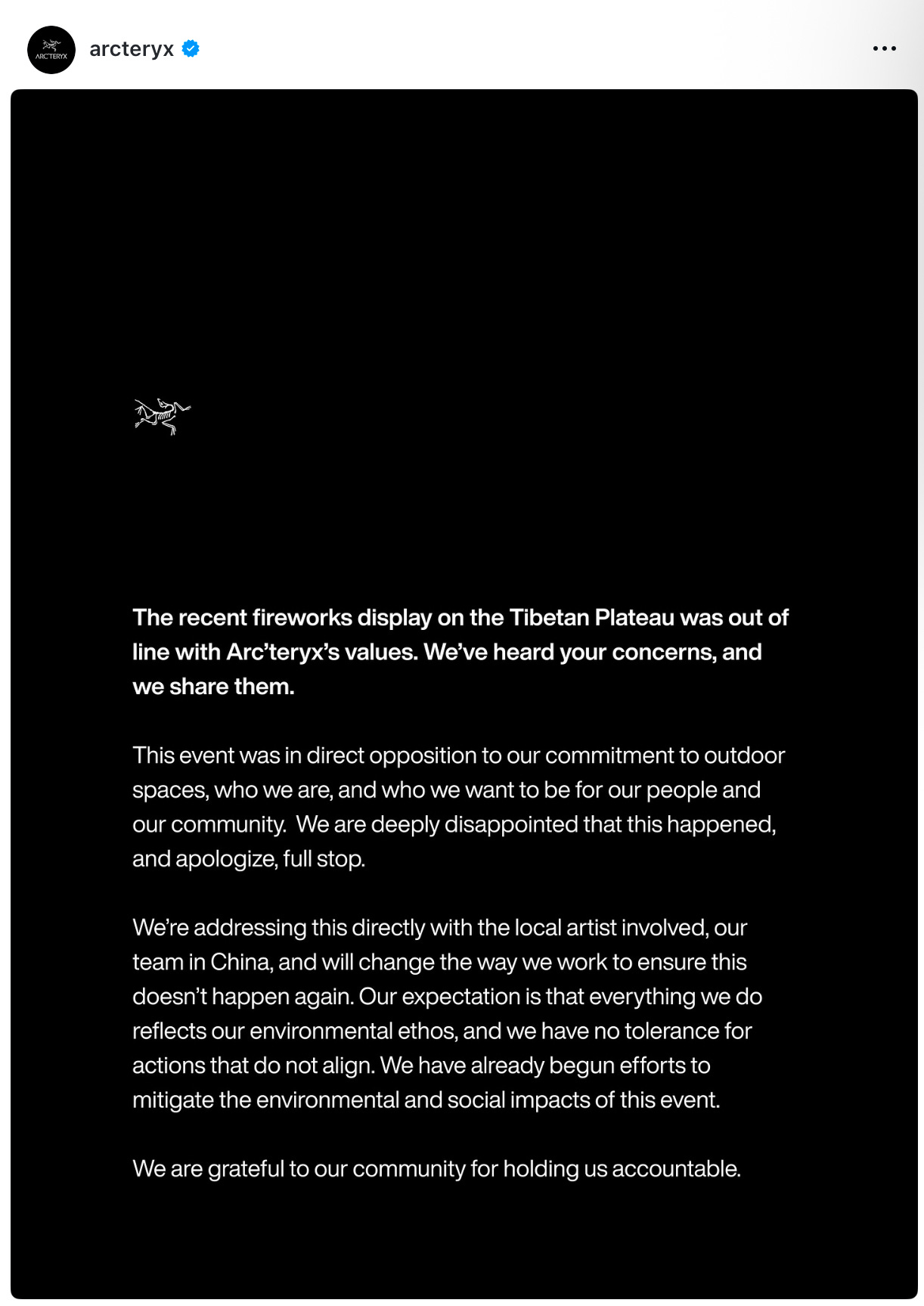
On September 21, Arc’teryx responded by posting an official statement: “The event was in direct opposition to our commitment to outdoor spaces, who we are, and who we want to be for our people and our community.” The brand also claimed that they have already begun “mitigating the environmental and social impacts.”
Cai’s studio issued an apology following Arc’teryx, declaring its commitment to cooperate with third-party institutions and local authorities of Gyantse in assessing, monitoring, and restoring the ecological environment of the areas affected by fireworks.
These written apologies, nonetheless, at least seen by netizens and outdoor enthusiasts, are far from enough. In their apologies, Arc’teryx and Cai have emphasized that the pigments they used for fireworks are made from biodegradable materials. However, many protestors on social media didn’t buy that. They pointed out that some biodegradable plastics may release organic compounds when they decompose. Such compounds will further cause microbial proliferation when entering water bodies like rivers, and thus threatening aquatic life. Additionally, microplastic particles may be produced during the process of degradation. Once entered soil, such particles would affect pH levels, prevent plant growth, and ultimately lead to long-term pollution.
In other words, while the fireworks used in this art project do cause less pollution than traditional ones, they are not completely harmless to the Himalayan snow mountains.
Aside from the ecological environment, the safety of small animals living on the plateau has also become a major concern for people. Arc’teryx said that the project team guided pikas and other animals away from the show zone using salt bricks before the show and cleaned up afterward, tilling the soil and replanting the vegetation. However, how does the team ensure each and every animal has evacuated to a safe area? How is the ecological impact caused by soil tilling to be dealt with later? Many are still holding their breath for a convincing response to such troubling questions.
Furthermore, people also accused the project for its violation of the indigenous culture. The loud noises created by the fireworks disturbed the sacred mountain deities and spirits, breaking the peace and tranquility guarded by local traditions.
Growing up, humans, especially outdoor enthusiasts, have learned lessons to respect nature, the foundation of humanity’s existence. Though we are incredibly small and insignificant when facing the natural world, we are also part of it. We harbor love for lands that sustain habitats, and show gratitude for waters and seeds that raise lives. This fleeting fireworks show reveals a different picture: mountains and plateaus were exploited by humans and subjected to irreparable damage merely for thirty minutes of amusement and attention.
“Shēng Lóng” practiced anthropocentrism in the name of “respecting nature,” which utterly betrays the Arc’teryx‘s core brand value—“there is a better way.” Apparently, they chose the worse way—an arrogant one—and it brought horrible outcomes.
As a pyrotechnic artist, Cai Guoqiang has been expressing his art through fireworks, gunpowder, and explosion for decades. However, in choosing “explosion” as the artistic method when featuring the theme of “reverence for nature,” both Arc’teryx and Cai have made an unwise decision that lacks environmental awareness.
At this point, people are eager to find out how artists can combine their art with nature while avoiding harms and violations. In the natural world, how should human art exist—or, indeed, should it exist at all?
Several artists have responded to the question through original and inspiring projects. Some creative examples include:
- Site-specific Land Art by Andy Goldsworthy . This British artist usually creates art in environments like forest and mountains and at the North Pole. His works fade away with time and weather change:
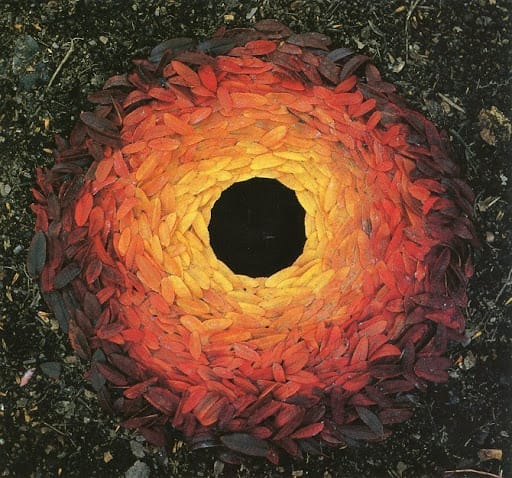
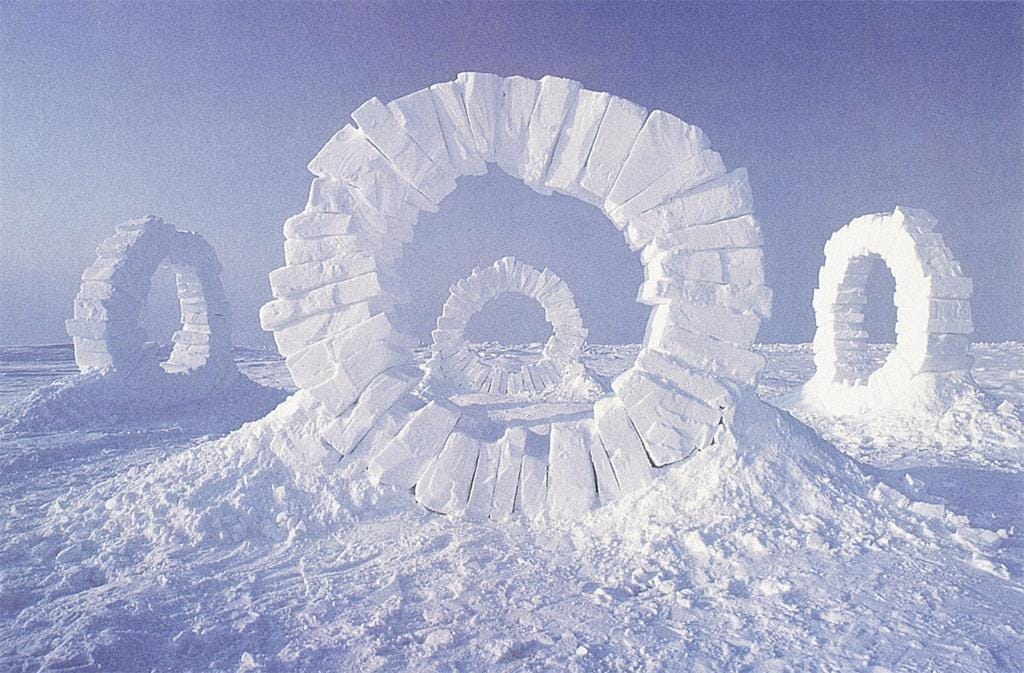
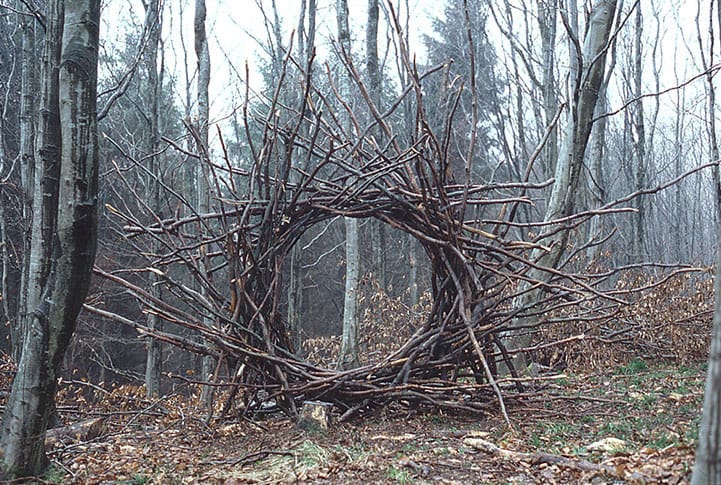
- Collaborative Installation by the D.A.S.T Arteam. This art team from Egypt created a monumental land art in the Sahara Desert, exploring the theme of infinity. The artwork eventually returned to the sand while its sentiments remained:
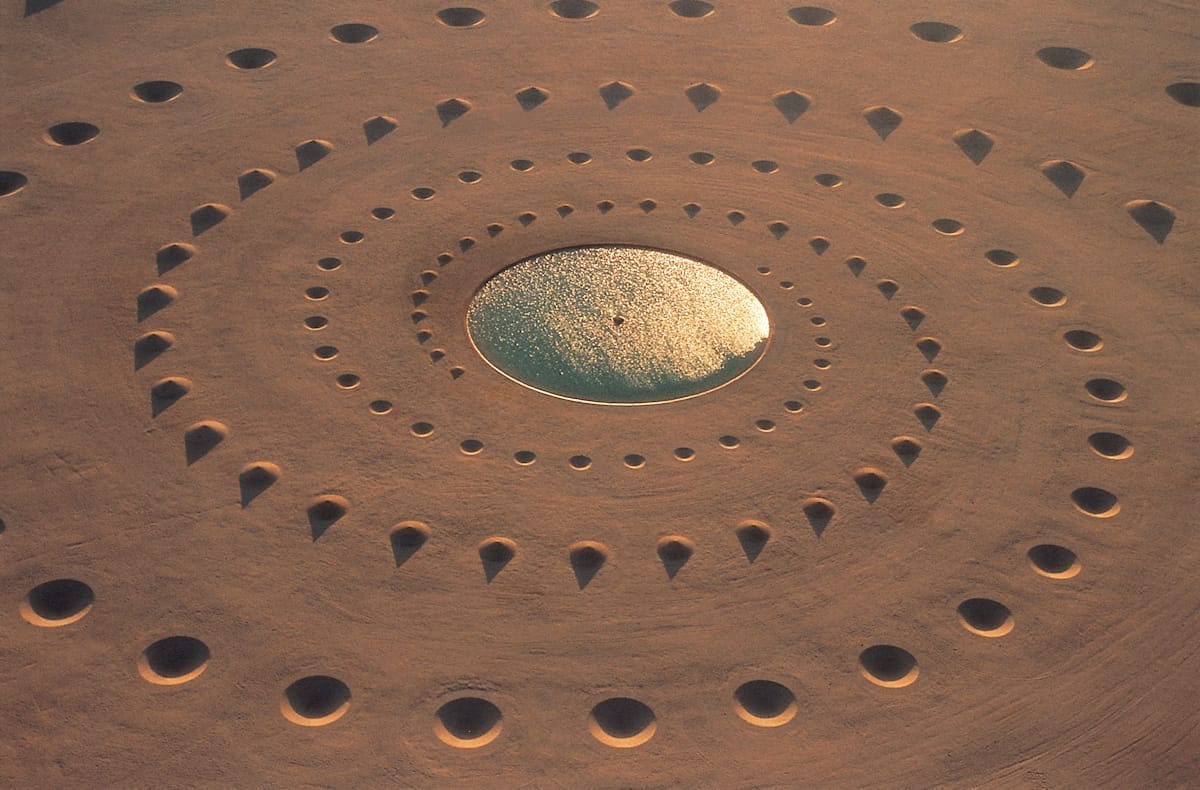
These incredible works of art stand as the solid proof that, as long as the story is told through the correct narrative method, art gets to coexist with nature. It truly depends on how careful and thoughtful brands and artists are with the choices they make when putting creativity to work.
At present, “Shēng Lóng” is still under investigation. Before Arc’teryx and Cai issue further statements and any conclusions are reached, let’s keep in mind that true art never stand above nature. It traverses nature without changing it.